

Online Patient Registration

Teeth Whitening for Sensitive Teeth: What You Need to Know
Yes, you can whiten sensitive teeth. The trick is to use a gentler method, a lower-strength gel, and a little preparation before you start. Whitening sensitivity usually shows up as a quick zing from cold air or a cold drink, and it typically fades within a day or two. A dentist can look at your teeth first and match you with an approach that keeps that zing to a minimum, or avoids it altogether.
Can You Whiten Sensitive Teeth Safely?
For most people, yes. Sensitive teeth do not automatically rule out a brighter smile. They just mean you need a slower, more controlled plan than someone with no sensitivity at all.
Safety depends on why your teeth are sensitive in the first place. Thin enamel, mild gum recession, or a habit of brushing too hard are common causes, and whitening often works fine once you account for them. Cavities, cracked teeth, or untreated gum problems are different. Whitening over those can cause real pain, so they need treatment first.
Why Does Whitening Make Teeth Hurt?
Whitening gels contain peroxide. It passes through the outer layer of your tooth and breaks up stain molecules inside, which is how your teeth get lighter. On the way through, peroxide can irritate the nerve inside the tooth, especially if your enamel is thin or your gums have pulled back and exposed the softer layer underneath.
Whitening can also leave your teeth slightly dehydrated for a short time. That is one reason sensitivity often peaks during treatment and settles down within 24 to 48 hours after you stop. A short burst of discomfort is common. Sharp, lingering pain is not, and it is a signal to pause.
Which Whitening Options Work Best for Sensitive Teeth?
Not every product treats sensitive teeth the same way. Here is how the main choices compare.
Custom trays from your dentist. These are molded to your teeth, so the gel stays on the teeth and away from your gums. Your dentist can use a milder gel and have you wear the trays for shorter periods. For many sensitive patients, this is the most comfortable route.
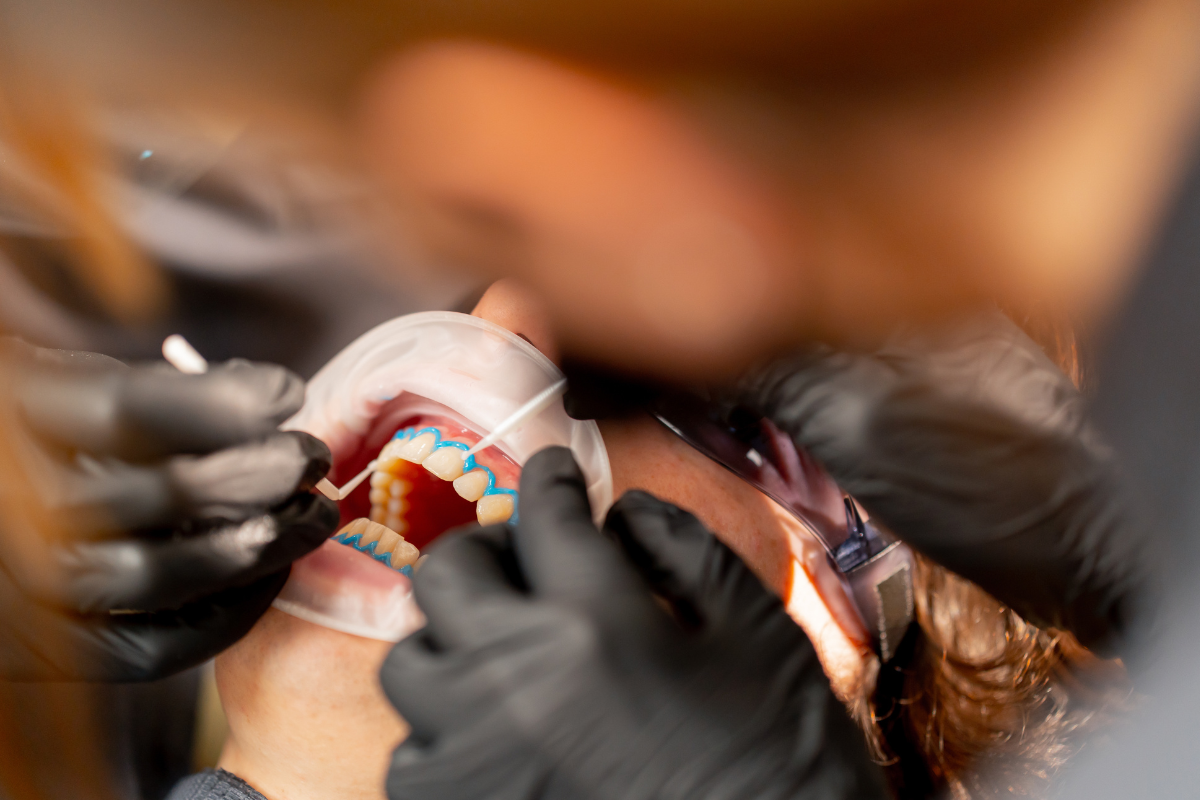
In-office whitening with protection. A dentist shields your gums, applies a stronger gel for a controlled amount of time, and can add desensitizing treatment during or after the session. It is faster, and you can stop if your teeth start to complain.
Whitening strips. Strips work well for mild staining, and lower strength versions exist. They can be harder to control, though, because the gel sometimes slips onto the gums. Use them every other day instead of daily if you notice a twinge.
Whitening toothpaste. It only lifts surface stains, so it rarely causes sensitivity, but it will not change the deeper shade of your teeth. Skip charcoal products and homemade mixes like baking soda and lemon juice. They wear down enamel and can make sensitivity worse.
How Can You Reduce Sensitivity Before and After Whitening?
A few small habits make a big difference, and you can start them about two weeks before whitening.
- Switch to a desensitizing toothpaste with potassium nitrate or stannous fluoride, and brush with it twice a day.
- Use a soft-bristled toothbrush and a light touch.
- Shorten your sessions. Wearing trays for 20 to 30 minutes beats wearing them for an hour.
- Space out your treatments. Whiten every other day instead of every day.
- Avoid very hot, very cold, and acidic foods and drinks for the first 48 hours after each session.
- Ask about a fluoride treatment. It strengthens enamel and calms irritated teeth.
If a particular session hurts, stop and give your teeth a few days. Pushing through the pain does not get you results faster. It only irritates the nerve more.
Who Should Wait Before Whitening?
Hold off and see a dentist first if you have any of the following:
- Cavities or cracked teeth
- Receding gums or exposed roots
- Gum disease that has not been treated
- Pain that already lingers when you drink something hot or cold
Pregnant and nursing patients are generally asked to wait as well. Also keep in mind that whitening gel does not change the color of crowns, veneers, or fillings. If you have visible dental work, it helps to plan around it so your results look even.
If you live in Sandusky and you are not sure whether your sensitivity is a simple enamel issue or something that needs treatment, a quick exam answers that question before you spend money on products.
Ready for a Brighter Smile Without the Sting?
Sensitive teeth should not keep you from a smile you feel good about. Visit our dental clinic in Sandusky. At Sanilac Smiles Dental Care in Sandusky, we check your enamel and gums, talk through your options, and build a whitening plan that keeps you comfortable from the first session to the last. Call us or book your visit online today, and let’s get your smile glowing.
FAQs :
1. How long does sensitivity last after whitening?
Most people feel it fade within one to three days. If it lasts longer than a week, call your dentist.
2. Does whitening damage enamel?
When you use products as directed, whitening does not damage enamel. Overuse and harsh homemade methods are what cause trouble.
3. Can I whiten if I have gum recession?
Often you can, but your dentist may recommend a gentler gel, a custom tray, or treating the exposed areas first.
4. Which is better for sensitive teeth, strips or trays?
Custom trays usually give you more control and less gum irritation than strips.
5. How often can I whiten?
Most people do well with a touch-up once or twice a year. Your dentist can set a schedule that fits your teeth.